
We are now offering completely customized virtual neuropsychological testing assessments and remote neurofeedback! Schedule your assessment and treatment today

Living with depression can feel like fighting an invisible, uphill battle every day—one where promising solutions often leave you still searching for answers. The weight of persistent depression can shroud your days in doubt, making it difficult to believe that lasting relief is even possible.
Healing is within reach. You can reclaim your life through depression treatment without medication. At Abbey Neuropsychology Clinic, our extensively trained team offers evidence-based therapies that provide meaningful improvements in the psychological, biological, and social causes of depression.
Antidepressant medications fail to help about 30% of people diagnosed with depression. Even those who experience some relief may struggle with unwanted side effects, dependency concerns, or treatment that only masks symptoms without addressing root causes.
Our medication-free treatment targets the underlying factors that contribute to depression, with significant advantages:
Whether you’ve tried medication without success or prefer to explore non-pharmaceutical options,our comprehensive approach offers a sustainable path to recovery and emotional well-being.
Depression is more than just feeling sad or experiencing mood changes. It’s a complex condition that deeply impacts your energy levels and often affects your ability to engage in activities you once enjoyed.
Common symptoms persisting for at least two weeks may include:
Depression develops from a unique combination of psychological, social, and biological factors. Each person experiences a different range of symptoms, making a personalized approach to treatment essential.
At Abbey Neuropsychology Clinic, we begin with a thorough neuropsychological assessment to accurately diagnose depression and identify any co-occurring conditions. More than half of people with depression also experience anxiety, and proper diagnosis is integral to effective treatment.


Through detailed psychological evaluation, we may recommend brain mapping therapy for depression. We will assess the following information:
Our comprehensive approach allows us to create truly tailored depression treatment plans that address all the factors contributing to your depression, particularly those that a one-size-fits-all solution might bypass.
While some people need long-term treatment, up to 80% of those participating in the treatments at Abbey Neuropsychology Clinic see improvements within 4 to 6 weeks. Your provider works closely with you to determine the best therapy combination for optimal results.
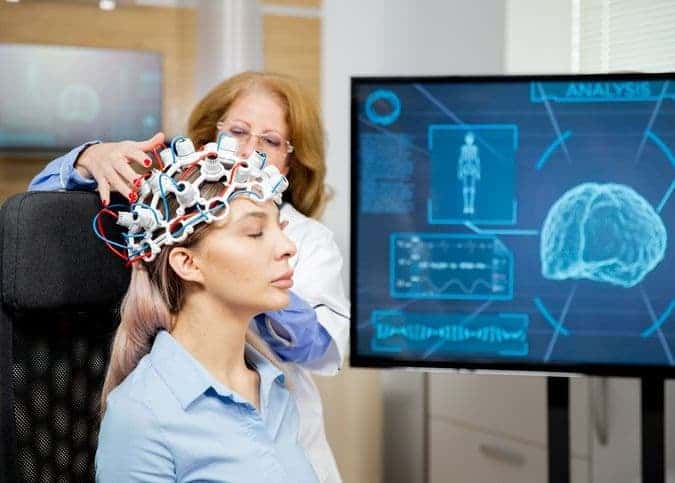
Neurofeedback is a cutting-edge brain treatment for depression that produces lasting changes in your brain’s imbalanced brain waves. By providing real-time feedback about your brain activity, neurofeedback treatment helps boost nerve activity in the brain areas associated with depression and anxiety. Unlike medications that temporarily alter brain chemistry, neurofeedback creates sustainable improvements that continue even after treatment ends.
Advanced brain mapping technology creates a detailed picture of your brain’s electrical patterns to identify specific areas that may be causing symptoms. A personalized map guides your treatment plan, ensuring we target the precise activity that needs rebalancing.
Biofeedback trains self-regulation, giving you the skills to control your body’s physiological responses associated with depression. By learning to recognize and modify stress responses, you gain powerful tools to manage depression symptoms on your own.
Light therapy improves cellular function and stimulates energy production, activities that can significantly improve your mood. This non-invasive approach can be particularly effective for seasonal patterns of depression.
The team at Abbey Neuropsychology Clinic specializes in many evidence-based psychotherapeutic techniques that effectively help people with depression:
Help is available through depression treatment without medication at Abbey Neuropsychology Clinic. Call today to find out more.
The timeline for results from non-medication depression treatment differs for each person, but most people notice initial improvements within 4 to 6 weeks of consistent treatment. Our neurofeedback treatment typically requires 20 sessions, while some psychotherapy approaches show benefits after just a few sessions.
Professional treatment forms the foundation of depression recovery, but certain lifestyle practices can significantly enhance progress:
Our team offers guidance on implementing lifestyle changes in ways that feel manageable, even when depression makes self-care more challenging.
Everyone deserves access to quality care. Our telehealth services provide depression treatment in California, Texas, and Florida, making professional support more accessible for people in different locations or with varying mobility capabilities. Virtual sessions maintain the same high standard of care as in-person visits, with treatment plans adapted to your home environment.
Abbey Neuropsychology Clinic does not accept insurance directly, but we provide superbills that you can submit to your insurance for potential reimbursement. Our team is happy to discuss financial considerations and payment options.
Children and adolescents experience depression differently. It’s common to show irritability rather than sadness, while a lack of motivation may resemble laziness. Our specialized depression test for kids helps identify these unique manifestations, allowing us to determine the ideal treatment options.
For younger individuals, non-medication approaches help avoid potential developmental concerns associated with some medications. Our team of child specialists incorporates age-appropriate techniques that make therapies engaging so younger people can learn lifelong coping skills during formative years.

Neuropsychological assessments are an invaluable diagnostic tool for psychiatric, developmental, and neurocognitive conditions like ADHD, depression, autism, and dementia. The team at Abbey Neuropsychology Clinic in Palo Alto, California…..
 Trustindex verifies that the original source of the review is Google.

 Trustindex verifies that the original source of the review is Google.
 Trustindex verifies that the original source of the review is Google.
 Trustindex verifies that the original source of the review is Google.
 Trustindex verifies that the original source of the review is Google.
 Trustindex verifies that the original source of the review is Google.
 Trustindex verifies that the original source of the review is Google.
 Trustindex verifies that the original source of the review is Google.

 Trustindex verifies that the original source of the review is Google.
